
Tata Consultancy Services (TCS) has stated that the recent suspension of eight IT firms, including itself, from a US green card programme will not impact its workforce strategy or customer engagements, citing its low number of applications and focus on local hiring.

A global research report by HCLTech indicates that integration has surpassed supply chain constraints as the primary challenge for the semiconductor industry. The study, which surveyed 300 senior leaders, highlights increasing dependency on semiconductors across industries, with 98% of enterprises more reliant now than three years ago and 99% expecting further increases. AI is also driving the strategic importance of semiconductor architecture.

BRICS leaders, in their New Delhi Declaration 2026, have called for wider access to Artificial Intelligence resources and stronger international cooperation to ensure the technology is safe, secure, inclusive, and reliable. The declaration outlines a broad technology agenda covering AI, cybersecurity, digital public infrastructure, telecom, quantum technologies, and advanced manufacturing, committing to implement the grouping's statement on 'Global Governance of Artificial Intelligence'.

The Reserve Bank of India's 25-basis point increase in the repo rate to 5.5 per cent is expected to exert pressure on housing affordability and buyer sentiment, particularly affecting interest rate-sensitive segments and potentially moderating sales during the crucial festival season.

The government is introducing a 0.4% Merchant Discount Rate (MDR) on UPI person-to-merchant payments above Rs 2,000, effective October 15. This move ends the zero-MDR regime, aiming to fund UPI infrastructure and sustainability, as the previous government subsidy was insufficient to cover operational costs. Payments between individuals and most everyday merchant transactions will remain free.

BrahMos Aerospace expects to develop the first prototype of its next-generation BrahMos-NG missile by 2027 or 2028, while a missile with a range of 1,500 km remains part of its future roadmap and is currently at the conceptual stage, the company's CEO and managing director Dr Jaiteerth Joshi said.
J&K Bank MD and CEO Amitava Chatterjee defended the surcharge on UPI transactions above Rs 2,000, stating it is necessary for the system's long-term sustainability. He also discussed the shift of household savings to mutual funds, the bank's profit growth, and India's consumption-based economy.

The Indian Institute of Management Ahmedabad (IIMA) has opened applications for the second batch of its two-year Blended MBA Programme in Business Analytics & Artificial Intelligence (BPGP: BA & AI). The programme, offered by the Krishnamurthy Tandon School of AI, aims to develop professionals who can integrate AI technology with management principles, addressing the industry's need for leaders capable of driving transformation and managing complex IT infrastructure, including data centres.

The proposal caught auto makers by surprise.
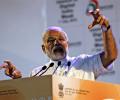
Prime Minister Narendra Modi, at the India Mobile Congress (IMC) 2026, articulated a vision for India's communications sector, emphasizing a global framework to combat cyber frauds and deepfakes. He called for India to become a hub for innovation and product development for the world. Industry leaders lauded his vision, highlighting India's robust digital infrastructure and its journey towards becoming a global technology leader, with a focus on trust, security, and responsible innovation.

The Insurance Brokers Association of India (IBAI) has warned that the IRDAI's proposed overhaul of insurance distribution practices could lead to a 70 per cent fall in revenues for intermediaries and result in 10 lakh job losses, citing concerns over the tight feedback deadline and the global uniqueness of the proposed architecture.

Investors are set to monitor quarterly earnings, crude oil prices, the Jio Platforms initial public offering, and foreign investor activity in the upcoming holiday-shortened week, according to market analysts.

HCLTech has announced a global partnership with Anthropic to establish a dedicated business unit focused on developing agentic AI solutions for enterprise clients using Anthropic's Claude. The collaboration aims to help businesses adopt AI systems that operate with minimal human intervention, prioritising safety, cybersecurity, and governance. HCLSoftware will also integrate Claude into its enterprise products.

The Maharashtra government announced a minimum 10 per cent water cut for all urban and rural local bodies starting October 16 due to a deficient monsoon and El Nino impact. The state is prioritising drinking water, planning for water stocks until August 2027, and implementing measures like preventing leakage, reusing treated wastewater, and curbing unauthorised extraction.

TCS chief executive and managing director K Krithivasan stated that the US is unlikely to target tech companies based on their domicile, with actions like the recent green card application programme suspension being driven by local sensitivities around jobs.
Prasar Bharati Chairman Prasoon Joshi voiced concerns over AI's impact on India's cultural heritage, including music and endangered languages, advocating for human-AI collaboration. Meanwhile, a Spotify report revealed significant growth in royalties for Indian artists, with linguistic diversity driving economic strength in the creative industries, highlighting the platform's role in enabling talent across various Indian languages.

The Olympic Council of Asia has signed a contract with Kuwait to host the inaugural Asian Esports and Mind Sports Games in 2027. This new continental event is expected to feature around 4,000 athletes, with discussions ongoing for the Philippines to host the second edition in 2029. Esports has evolved from a demonstration event to an official medal sport at the Asian Games, and this dedicated event offers Indian players more opportunities.

Jio Platforms Ltd's Rs 30,213-crore initial public offering was subscribed 3.01 times, attracting approximately Rs 66,500 crore in public bids, with qualified institutional buyers oversubscribing their portion by 9.02 times, while retail investor demand remained under-subscribed at 0.68 times.

US Secretary of State Marco Rubio kick-started a three-day visit to India on Tuesday to advance bilateral ties in energy, trade and investment, defence, critical technologies, and exchange views on the West Asia crisis.

'Indian IT firms must hire and train more Americans while reducing dependence on sending employees from India to the US.'
A new report by TeamLease Digital highlights a significant AI-ready talent gap in India's technology industry, with shortages of 53-60 per cent in Generative AI and cloud skills. The report indicates that only 16 per cent of IT professionals possess AI skills, leading to rising salary premiums for AI-core roles and a projected demand for over 10 lakh GenAI roles by 2026.

The removal of Goods and Services Tax (GST) on individual health and life insurance has led to a significant increase in new policy purchases and higher coverage levels, despite an initial surge moderating, according to industry experts.

IBM India and South Asia MD Sandip Patel stated that India is at a defining moment with a unique opportunity to shape exponential technologies like artificial intelligence, emphasizing that "when India builds, it builds for billions," leading to scalable impact. Speaking at the IBM Think 2026 event, Patel highlighted that the AI revolution is still in its early stages, requiring enterprises to redesign their operations around agents, real-time data, automation, hybrid architecture, and trust. He also introduced the concept of "digital swaraj" or sovereignty in the Indian context, stressing the importance of control over operating environments, data, technology, and AI execution. IBM also announced an MoU with MeitY Startup Hub to accelerate India's deep tech innovation and startup ecosystem, providing startups access to IBM's technology expertise and platforms like watsonx and Sovereign Core.

Doctors and researchers are increasingly concerned about the potential link between exposure to polluted air during pregnancy and its influence on foetal development, particularly the male reproductive system. While hypospadias, a common congenital abnormality, is multifactorial, endocrine-disrupting chemicals in air pollution are being investigated for their role. Experts call for more research and advise expectant mothers on preventive measures.

'My biggest fear about AI is that humans are going to rush to deploy it before AI is ready.'

Following astronaut Shubhanshu Shukla's historic visit to the International Space Station, a significant surge in interest for space science careers is observed among Indian students. Srimathy Kesan of Space Kidz India highlights this shift from traditional fields like engineering and medicine, while Nobel laureate Didier Queloz emphasises the crucial role of curious young scientists in shaping the future.

India has achieved its highest-ever annual Foreign Direct Investment (FDI) inflow of USD 94.53 billion in FY 2025-26, with cumulative FDI reaching USD 843 billion since 2014-15, announced Commerce and Industry Minister Piyush Goyal. Production Linked Incentive (PLI) schemes have also significantly boosted investment, production, exports, and job creation.

India's cybersecurity agency, CERT-In, has issued a critical advisory warning about autonomous AI agents accessing sensitive data of Indian organisations without authorisation. Government sources on Friday emphasised the need for companies to bolster cybersecurity measures and monitor system activity, noting that while no major compromise occurred, the incident serves as an early warning. Future AI regulation is expected to address the risks posed by these agents.

Boeing has identified a software issue in some 737 MAX planes that could disengage the automated flight guidance system after a missed landing approach. The company is developing a permanent solution and has advised operators on interim procedures. Indian carriers Air India Express and Akasa Air operate these aircraft, with Akasa Air stating no impact on their safety.

India's government is set to release its draft National Steel Policy for public consultation, aiming for over 600 million tonnes of steelmaking capacity and 500 million tonnes of consumption by 2047. The policy will also introduce a ~5,000-crore scheme to incentivise small steel producers for carbon emission reduction and address challenges like raw material availability and technological dependence.

Lodha Developers plans to generate approximately 10,000 crore in sales over the next three to four years by monetising about 150 acres of land at its data centre park in Palava, part of the Mumbai metropolitan region (MMR). This strategy is a planned recurring pillar of their business, funding the build-out of 1 gigawatt of powered shell capacity and aiming for over 2,000 crore in annual rental income by FY32.
Experts at a national symposium in Shillong discussed the role of Artificial Intelligence in tourism, emphasising that AI should support human judgment, local knowledge, and cultural values rather than replace them. Discussions highlighted the need for robust policies to address ethical concerns, safeguard livelihoods, and preserve cultural heritage while leveraging AI for innovation and sustainability in the tourism sector, particularly in Meghalaya.

The Delhi government has announced a comprehensive audit of the Narela and Bawana industrial areas, covering the period from 2011-12 to 2025-26. The audit, initiated by the DSIIDC, aims to identify financial irregularities, fund diversions, and their financial impact within these public-private partnership projects.

A recent IIT Indore study highlights the evolving landscape of protest sites in Delhi, from Rajpath to Jantar Mantar, and now to more distant locations like Ramlila Maidan, Burari Ground, and CBD Ground. This shift, driven by authorities, raises concerns about the visibility, accessibility, and effectiveness of democratic protests, as moving demonstrations further away from power centres can diminish their impact and public engagement.
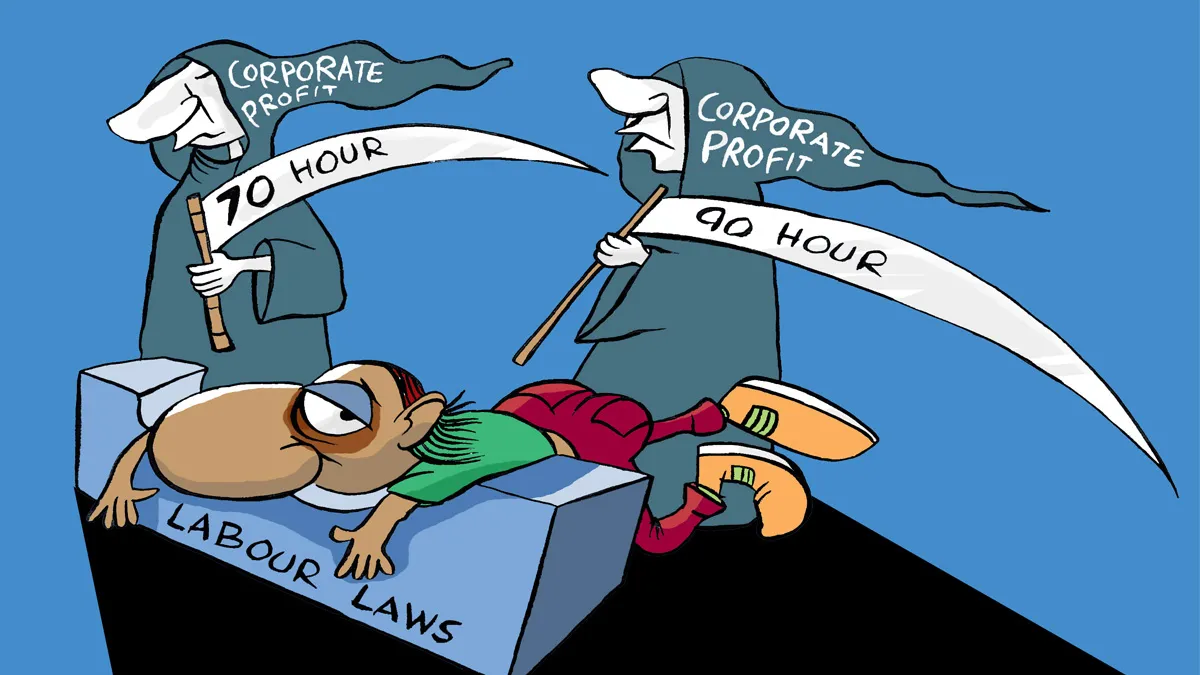
The Indian government is pressing all states and Union Territories (UTs) to publish their rules under the four new labour Codes by October 31, aiming to fully operationalise the new labour law framework. This move is crucial as labour falls under the concurrent list, requiring state-level rule-making for effective implementation.

Industry experts advocate for India to develop its own artificial intelligence (AI) safety framework, distinct from US or EU models, to address unique challenges like deepfakes and cyberattacks. They call for a comprehensive commitment involving all stakeholders and a hybrid regulatory approach combining voluntary and binding measures, as the Indian government also considers new AI regulations.

US Secretary of State Marco Rubio's visit to India this week underscores the complex dynamics of global energy policy, as Washington re-evaluates sanctions on Russian oil buyers amidst India's continued reliance on Russian crude.

Cathy Li, Head of the Centre for AI Excellence at the World Economic Forum, advocates for integrating AI literacy into India's education curriculum and incentivising AI companies to prioritise child safety. She stresses the need for localised solutions that account for India's linguistic and cultural diversity, as well as varying levels of connectivity and digital literacy, to ensure AI systems are safe and beneficial for children.
Chief Economic Adviser V Anantha Nageswaran has urged the industry to invest in skilling, capability development, and innovation to counter the challenges posed by artificial intelligence, particularly for Global Capability Centres (GCCs). He noted that while the government has supported GCCs through Budget measures like simplifying transfer pricing and promoting expansion into tier-II/III cities, industry must move beyond low-cost execution to thrive in an an AI-driven landscape. Nageswaran emphasised that AI displaces routine tasks, necessitating a focus on higher-value work and continuous skill enhancement to maintain India's competitive edge.

Property insurance premium rates are increasing by 25-30 per cent, primarily due to a reduction in discounts, following substantial claims from natural calamities like the Gujarat floods, which caused an estimated 5,000 crore in losses.
